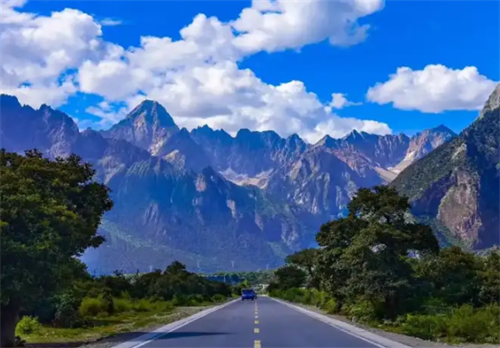
For many travelers, Tibet feels like a dream. It’s a place of snowcapped mountains, turquoise lakes, and monasteries that seem to touch the sky. While you can fly into Lhasa or take the train across the Qinghai–Tibet Plateau, there’s nothing quite like driving along National Highway 318 (G318)—one of the world’s most scenic roads.Stretching from Shanghai all the way to Tibet’s border with Nepal, this highway is often celebrated as “China’s most beautiful road.”
If you have the time and spirit for adventure, a self-driving trip across G318 into Tibet is an unforgettable way to experience landscapes that shift from lush river valleys to dizzying Himalayan passes. This guide walks you through the journey, with practical tips and highlights along the way.
Why Choose a Self-Driving Tour in Tibet?
Unlike structured group tours, a self-drive adventure offers complete freedom.You can stop at hidden villages, linger by a lake, or pull over at a mountain pass to breathe in the thin, crisp air. The pace is yours to set. And with the changing scenery along G318, every hour behind the wheel feels like turning a new page in an epic novel.
That said, Tibet’s altitude, road conditions, and long distances mean this trip requires preparation. But for those willing to take it on, the reward is a journey that feels less like travel and more like a pilgrimage.
Preparing for the Road:
1. Travel Permits
Foreign travelers need more than just a Chinese visa. To enter Tibet, you’ll need a Tibet Travel Permit, typically arranged through a registered travel agency. Even if you plan to drive, regulations require a guide to accompany you once you’re in Tibet proper.
2. Vehicle and Driving License
A Chinese driver’s license is required to legally drive in Tibet.Some agencies offer self-drive packages with rental cars and the necessary permits. SUVs with good ground clearance are strongly recommended—the roads are paved but often rough, especially near mountain passes.
3. Altitude Considerations
Much of Tibet sits above 3,500 meters (11,500 feet). Acclimatization is crucial. Many travelers spend a few days in places like Kangding or Litang before pushing higher. Carry basic medicine for altitude sickness, stay hydrated, and ascend gradually.
4. Essentials to Pack
Warm clothing for unpredictable weather
Snacks and plenty of water
A reliable offline map or GPS system
Oxygen canisters for emergencies
A good camera—you’ll use it constantly
The Route: Highlights of G318
National Highway 318 stretches more than 5,000 kilometers, linking Shanghai to the Zhangmu border in Tibet.Most travelers focus on the stretch from Chengdu, Sichuan to Lhasa, Tibet—about 2,000 kilometers of jaw-dropping scenery. Here are the highlights along the way:
-Chengdu: The Gateway
Your journey begins in Chengdu, capital of Sichuan Province. Known for spicy hotpot and giant pandas, this bustling city is the last major urban hub before you head west into the mountains. It’s worth spending a day here to stock up on supplies and enjoy the laid-back tea culture.
-Kangding: Where the Plateau Begins
Driving out of Chengdu, the road climbs toward Kangding, a historic trading town at 2,600 meters. Set in a valley with rushing rivers and Tibetan prayer flags dancing in the wind, Kangding is where you first feel the world around you has changed.
Don’t miss: The Love Song of Kangding, a cherished folk tune honoring the romance and beauty of the town.
Tip: Stay a night to start your altitude adjustment.
-Litang: The High-Altitude Town
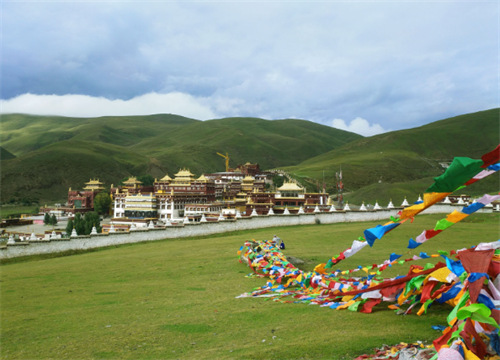
Further west lies Litang, one of the highest towns in the world at 4,000 meters. Its sprawling grasslands are dotted with yaks, nomadic tents, and whitewashed monasteries.
Highlight: Litang Monastery, where you can see monks debating and locals spinning prayer wheels.
Atmosphere: Life feels raw and authentic here. Streets are filled with horsemen, and the air is crisp and thin.
-Batang and the Jinsha River:
Driving on, you’ll reach Batang, near the border of Sichuan and Tibet. Here, the Jinsha River (the upper Yangtze) carves dramatic gorges. As you cross the bridge spanning the river, you officially step into Tibet.
This crossing feels symbolic: you’re leaving behind Sichuan’s greenery and stepping onto the Tibetan Plateau, where the landscapes open up into vastness.
-Markam to Zuogong: Endless Switchbacks
From Markam, the road winds through endless switchbacks over high mountain passes, some above 5,000 meters. This stretch is both challenging and breathtaking.
Viewpoints: Snowcapped peaks on one side, deep valleys on the other.
Driving note: Distances are long, and fuel stops are sparse—always refill when you can.
-Ranwu Lake: A Turquoise Mirror
A highlight of G318 is Ranwu Lake, a glacial gem surrounded by snow-capped peaks. Its waters shift from deep blue to turquoise, reflecting the mountains like a giant mirror.
What to do: Stay overnight at a nearby guesthouse.Sunset and sunrise here are magical, with colors that make the whole landscape glow.
-Bomi: Land of Forests
Continuing west, you’ll reach Bomi, at a relatively “low” altitude of 2,700 meters. After days of stark plateau scenery, Bomi’s lush forests feel like another world entirely. The area is rich in glaciers and rivers, offering a softer, greener side of Tibet.
Nearby highlight: The Midui Glacier, considered one of the most beautiful in China.
-Nyingchi: The Swiss Alps of Tibet
Nyingchi is often called the “Switzerland of Tibet.” With an average altitude of 3,000 meters, it’s lower than much of the plateau, which means milder weather and dense forests.
Famous for: Peach blossom season in spring, when the entire valley turns pink against snowcapped peaks.
Tip: The section along the Yarlung Tsangpo River offers some of the most picture-perfect views of the entire journey.
-Lhasa: The Sacred City
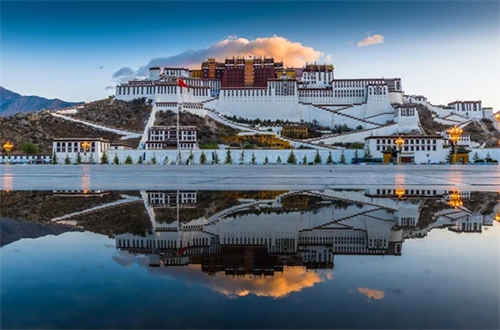
Finally, after days on the road, you arrive in Lhasa, Tibet’s spiritual and cultural heart. The sight of the Potala Palace rising above the city is a moment you’ll never forget—it feels like arriving at the “place closest to heaven.”
What to see: Jokhang Temple, Barkhor Street, and Sera Monastery, where monks hold spirited debates.
What to feel: A mix of exhaustion, exhilaration, and awe. Few journeys make the destination feel so well-earned.
Practical Travel Tips:
1. Plan for Slow Travel
Distances may not look far on the map, but mountain roads and altitude mean progress is slower than expected. Build in rest days.
2. Fuel Up Regularly
Gas stations can be hundreds of kilometers apart. Never pass one without topping up.
3. Respect Local Culture
Tibet is deeply spiritual. Be respectful in monasteries, ask before taking photos of locals, and follow guidance from your Tibetan hosts.
4. Stay Flexible
Landslides, snow, or sudden road closures can happen. Flexibility—and patience—are essential.
5. Travel Season
The best months for a self-driving trip are May to October. Winter roads can be blocked by snow, and spring brings unpredictable weather.
Why This Journey Stays With You?
Crossing National Highway 318 into Tibet is not just a drive—it’s a transition from one world to another. You begin in the bustling streets of Chengdu, pass through misty gorges, climb into grasslands where yaks graze, and finally crest mountain passes that feel like the roof of the earth.
The landscapes are humbling, but it’s more than just scenery. Along the way, you meet people who live with a deep sense of tradition and spirituality. You see prayer flags fluttering in the wind at high passes, sending blessings into the sky. You hear the murmur of monks chanting in candlelit halls.
By the time you roll into Lhasa, you’ll understand why Tibet is called the place closest to heaven. Not because it’s high above sea level, but because the journey there lifts something in your heart.
Recommend:
Hotel Booking Hacks: How to Avoid Common Pitfalls
Top 10 Hidden Gems of Small Islands in Southeast Asia: Scenic Beauty, Low Population, and Exceptionally High Value for Money
International Travel Emergency Guide: How to Handle Unexpected Situations
Diving Beginner's Manual: Explore the Blue Poison of Palau and Sipadan Together